Devoq Design designs fintech products that people trust with their money: banking apps, payment flows, lending journeys, investing dashboards and the websites that bring customers in. Research-led, built around security and regulation from the first wireframe, and accessible to WCAG 2.2 AA, with senior designers deciding what ships.
Fintech products where trust is part of the interface
Money products are unforgiving. A customer sends rent from a train platform, the transfer screen hides the fee until the confirmation step, and she cancels and uses her old bank instead. A new applicant photographs his passport in a dim kitchen, the identity check fails with no explanation, and he does not try again. A first-time borrower reads a loan offer that puts the total cost in a footnote and later complains that nobody told him. A customer on a screen reader cannot tell which account a payment is leaving. Regulation shapes the interface too: strong customer authentication, consumer-duty outcomes, disclosures and consent all have to be visible without making the product feel like a form. We design journeys that stay clear under those constraints: fees and totals at the point of decision, identity checks that explain what went wrong and how to fix it, and failure states written in plain words. That means testing with real customers on real devices, mapping every edge case from declined payments to dormant accounts, and giving your engineers and compliance team documentation they can act on. The Minxpay digital wallet was designed this way. Whether you are launching a neobank, a payments platform, a lending product or a wealth app, Devoq Design delivers interfaces customers understand and regulators can follow.
Our Services
Design services shaped by financial services, from customer apps to bank and fintech websites:
Fintech App Design
Banking, payments, lending and investing apps designed mobile-first with secure onboarding and clear money movement. Identity checks, authentication prompts, pending and declined states and plain-language fees, each tested with customers on their own phones before the build starts.
Bank, fintech and insurtech websites built for trust, product comparison, accessibility and compliant lead capture. Product pages that show rates and fees where a visitor decides, calculators that match the real offer and application forms that hand clean applicants into onboarding.
Fintech UI/UX design by Devoq Design covers the parts that win customer trust:
Compliance drawn into the journey
Consent, disclosures and authentication steps are designed to fit regulations such as PSD2 in Europe, PCI DSS 4.0.1 for card data and APRA CPS 234 in Australia, then documented for your compliance team. A good journey places each regulated element where the customer needs it; a bad one stacks every disclosure on one screen, which customers skip and regulators still question.
Onboarding that converts
Identity checks, document capture and account setup are tested for the moments applicants abandon, with clear status and recovery when verification fails. We design the retry: what to photograph again, why it was rejected and how long a manual review takes. Applicants who hit an unexplained failure rarely come back, and that lost applicant is the most expensive one you paid to acquire.
Plain-language money moments
Fees, rates, limits and risks appear where the decision is made, which supports outcomes-focused rules such as the FCA Consumer Duty in the UK. We write the microcopy for the confirmation screen, the pending state and the declined payment, and test it with people who are nervous about money, because a confident customer reads nothing and an anxious one reads everything.
AI with clear boundaries
Customer-service agents, spending insights and fraud alerts are designed with explained reasoning, human escalation and visible limits. KPMG reported via PYMNTS in 2026 that 51% of banks are piloting AI agents, so the design question is how an agent shows what it can do, asks before it acts on an account and hands over to a person when the customer wants one.
Banking and Neobanks
Payments and Wallets
Lending and Credit
Wealth and Investing
Approach Section
Our Approach to Fintech UI/UX Services
Discovery and Research
01
Customer interviews, analytics review, a scan of competitor journeys and a map of the regulations in each market you serve. We also sit with your support and fraud teams, because the tickets and the chargebacks show exactly which screens confuse people, long before any survey does.
Wireframes and Prototypes
02
Clickable flows for onboarding, payments, disputes and account management, tested with customers before visual design. Our UX design work prototypes the failure states first, since a declined transfer or a failed identity check is where a fintech product earns or loses the account.
UI Design
03
A precise, legible visual system for data-heavy screens, with accessible color and type, states for every component and tokens for engineering. Amounts, balances and charts get their own typographic rules so that a number is never ambiguous, whether it is a fee, a limit or a projected return.
Usability Testing
04
Task-based sessions on money movement, error recovery and security prompts, including users who are nervous about finances. We measure whether people can say what will happen to their money before they confirm, and we test step-up authentication at the moment it interrupts a real task.
Handoff and Optimization
05
Developer-ready files and documentation, then funnel improvements guided by live drop-off data. We watch onboarding completion, first-payment success and support contacts per journey, and we work through the fixes with your product and compliance teams inside your release process.
Why Devoq Design?
We make the collaboration of people and interface more intensive and exciting.
Fintech Design Experience
Banking, payments and lending interfaces designed with security, clarity and regulation treated as one brief. We have worked on wallets, onboarding, lending and investing screens, so we know where those three pull against each other.
Security-Aware Design
Authentication, step-up checks and fraud warnings designed so protection does not push customers away. Each prompt is placed where the risk is, explained in a sentence and tested for how often people abandon at that point.
Built for Multiple Markets
Journeys adapted for the US, UK, EU, Australia and New Zealand, where open banking and disclosure rules differ. One design system, with market-specific consent, fee display and authentication patterns documented for each.
Trust Through Clarity
Every screen judged by whether a customer knows what will happen to their money before they confirm. If the answer needs a help article, the screen is redesigned until it does not.
Ready for Integration
Designs that account for core banking, KYC, card and open banking providers so the interface matches the data available. We confirm what each provider returns before we draw a status screen that depends on it.
Speed With Senior Judgment
About 5x faster delivery using AI-assisted drafting, with senior review on every screen before release. The time saved goes into more rounds of testing with real customers, not into a shorter engagement.
Discover Our Case Studies
Explore Compelling Case Studies: Real Solutions, Real Success Stories
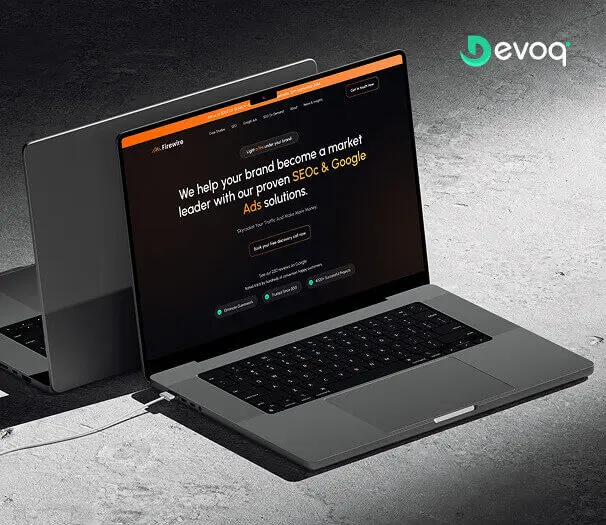
We crafted a sleek and intuitive website for Firewire, a digital marketing company specializing in SEO and Google Ads, to showcase their expertise and results. Our design highlights their data-driven approach to connecting businesses with their audience.
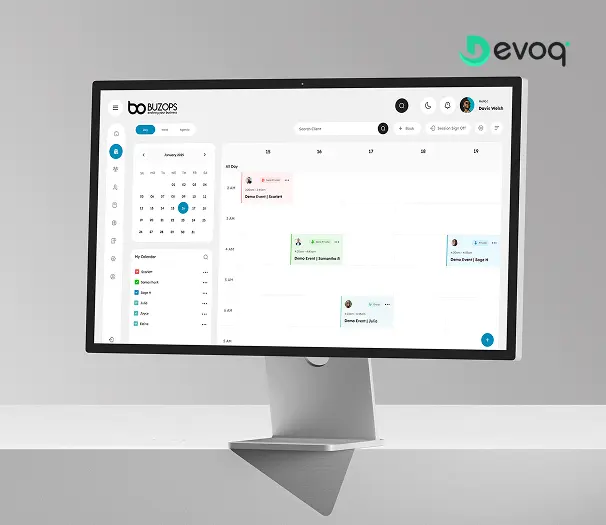
We created a clean and scalable SaaS experience for Buzops, helping businesses manage operations, automate workflows, and improve customer engagement through a unified platform.
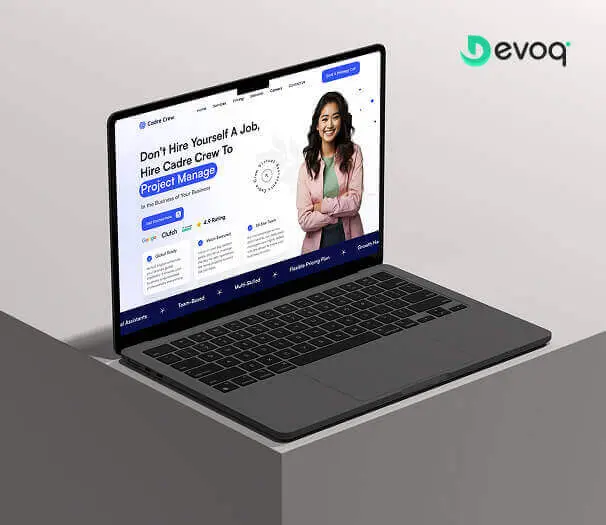
We designed and developed a user-friendly website for Cadre Crew, a company that helps growing businesses scale operations with virtual assistant and project management services. Our goal was to create an intuitive and efficient experience for their users.
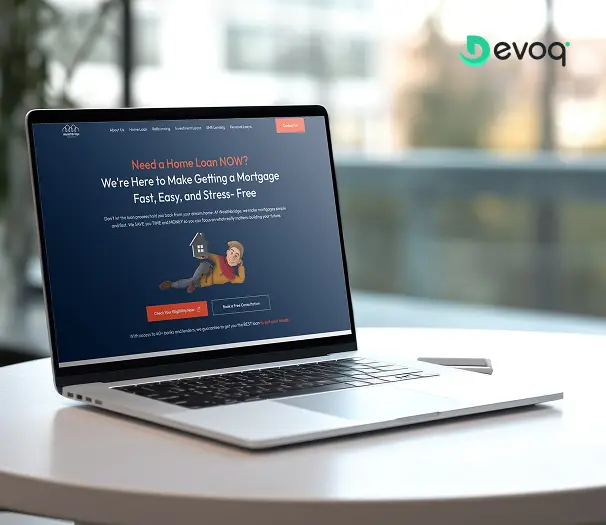
We built a modern online platform for Wealth Bridge, a mortgage and loan comparison service. The goal was a credible, easy-to-use experience that makes complex loan information simple. With a focus on clarity, performance and smooth interaction, the site helps borrowers compare home-loan products and choose the right one with confidence.
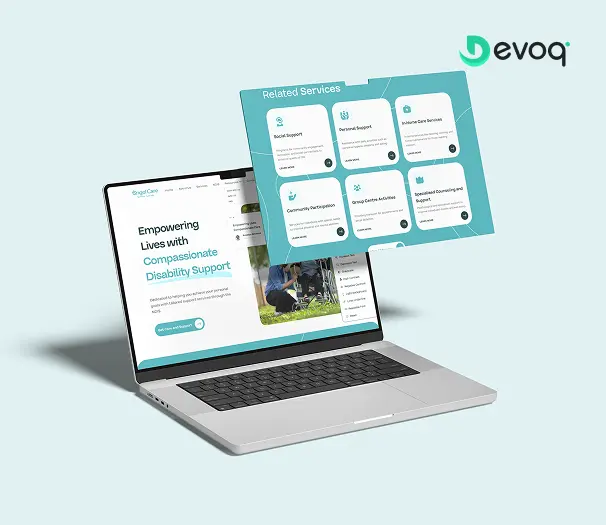
We created a compassionate and accessible digital experience for AngelCare, simplifying care discovery, improving NDIS understanding, and empowering users to access personalized support services with ease.
User research, journey mapping, wireframes and prototypes, visual interface design, design systems, accessibility checks and developer handoff for banking apps, payment flows, lending journeys, investing dashboards and fintech websites. Engagements can cover the whole product or a single journey such as onboarding, and we often start with a UX audit of the current product to find where customers stall before any redesign is scoped.
How do you design for financial regulation?
We design disclosures, consent and authentication into the flows and document each decision, so your compliance team can review against PSD2, PCI DSS 4.0.1, the FCA Consumer Duty, APRA CPS 234 or the rules in your market. Each regulated element gets a fixed place in the design system, so a new product journey starts compliant rather than being corrected before launch. We do not provide legal advice.
Can you redesign our existing banking or fintech app?
Yes. We analyze funnel data, support tickets and app reviews to find where customers stall, then redesign the journeys causing the loss, commonly onboarding, payments and card management, while keeping your core systems. Changes are released in stages so that customers who have memorized the current flow are not surprised mid-payment, and the riskiest screens are tested with real users before they go live.
Do you design AI features for financial products?
Yes. Customer-service agents, spending insights and fraud alerts are designed with explained reasoning and a clear route to a human. Capgemini reported in December 2025 that 75% of banks cite customer-service agents as a use case, and the FCA AI Live Testing cohort shows how closely regulators are watching, so each agent screen shows what it can do, confirms before acting on an account and keeps a person one tap away.
Do you work on open banking products?
Yes. We design consent and data-sharing journeys for open banking in the UK and EU, the Consumer Data Right in Australia and the regulations that took effect in New Zealand on 1 December 2025. The consent screen is where customers decide whether to trust a new product, so we test it for whether people understand what is shared, with whom, for how long and how to revoke it.
How much does fintech UI/UX design cost?
It depends on the number of journeys, user types and markets, and on whether research and testing are included. A single payment flow for one market costs less than onboarding, payments and lending across four regulatory regimes, and each KYC, card or open banking provider adds states to design. After a short discovery call we scope a fixed price for a defined product or a monthly retainer for continuing work.
How long does a fintech design project take?
The drivers are the number of journeys and markets, how many providers the interface depends on, and whether research and usability testing are in scope. Compliance review is often the longest step, so we agree the review pattern with your team early and submit screens in batches rather than at the end. A focused journey moves quickly; a multi-market product takes longer because each market needs its own consent and disclosure variants.
How accessible will the product be?
We design and test to WCAG 2.2 AA, covering contrast, keyboard and screen-reader structure, large tap targets and plain language, which matters most on screens that handle payments and identity. Amounts, account names and confirmation buttons are tested with a screen reader so a customer always knows which account money is leaving. Products sold in the EU are also checked against the European Accessibility Act.