Devoq Design designs healthcare software that patients can use without help and clinicians can use without slowing down: patient portals, telehealth apps, provider dashboards, intake and scheduling flows. Research-led, HIPAA-aware and accessible to WCAG 2.2 AA, with AI used to speed drafts and senior designers deciding what ships.
Healthcare products that work in the exam room, the waiting room and at home
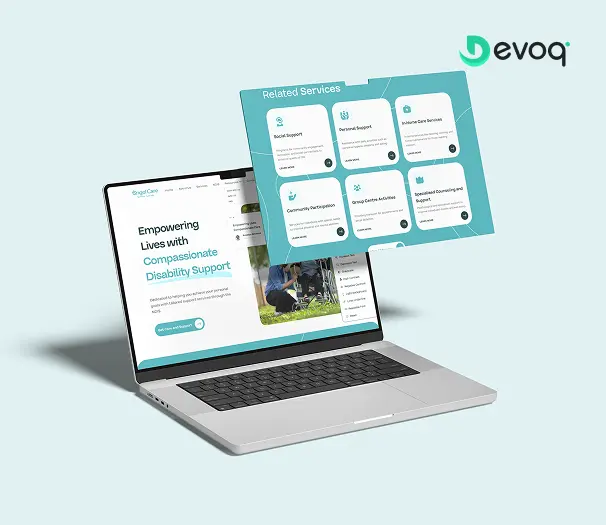
Healthcare interfaces fail in specific ways. A patient fills in an intake form on a phone in a car park, loses signal between pages and gives up, so the front desk re-keys it on paper. A nurse on a ward needs six clicks and two screens to place one order, with gloves on and a patient waiting. A results page tells someone their bloodwork is abnormal with no context and no way to ask a question, so the clinic phone rings. A portal passes a desktop demo and then breaks for an older patient using a screen reader. We design for the real settings where care happens. That starts with observing how patients and staff actually work, then mapping flows that respect clinical workflow, privacy rules and accessibility from the first wireframe: forms that save progress and ask only what the visit needs, clinician screens built around the task rather than the data model, and every screen designed to WCAG 2.2 AA. Our work on Angel Care, a disability support services platform, was designed with the same approach. Whether you are building a telehealth platform, a patient portal or an internal tool for a provider network, Devoq Design delivers interfaces your users trust and your engineers can build.
Our Services
Design services shaped by the healthcare industry, from patient-facing apps to provider websites:
Healthcare App Design
Patient apps, telehealth, remote monitoring and clinician tools designed mobile-first with privacy built into every flow. Onboarding and consent, video visits, readings and alerts, secure messaging and documentation screens, each tested with patients and care teams on the devices they already use.
Clinic, hospital and healthtech websites optimized for accessibility, speed, local search and online booking. Clinician directories, service and condition pages, location pages and intake forms structured so a patient can find the right doctor and book without a phone call.
Healthcare UI/UX design by Devoq Design covers the parts that decide adoption:
Designed around clinical workflow
We shadow how staff and patients work before drawing a screen, so flows match real rounds, triage and follow-ups instead of an org chart. A good clinical screen puts the next action, the patient context and the exception path within one glance. A bad one adds clicks to every encounter, and staff build workarounds in spreadsheets and sticky notes that the product never sees.
Privacy and compliance by design
Consent, data minimization, audit trails and role-based access are drawn into the flows, aligned with HIPAA in the US, GDPR and UK GDPR in Europe, and the Australian Privacy Act. We ask for the smallest set of fields a task needs, show patients what is shared and with whom, and give your compliance reviewer annotated screens rather than a verbal assurance.
Accessible to WCAG 2.2 AA
Contrast, focus states, large tap targets and screen-reader structure are checked on every screen, which also keeps public providers aligned with ADA Title II. Many patients are older, in pain or using one hand, so accessibility is tested with real assistive technology rather than ticked off a checklist. Getting it wrong means the people who need care most are the ones locked out.
AI features with human oversight
Ambient note-taking, symptom intake and summarization are designed with review steps, clear provenance and an easy way for clinicians to correct the machine. The AMA reported in February 2025 that 66% of US physicians used health AI in 2024, so the question is no longer whether to add AI but how to show its sources, limits and sign-off on screen.
Efficient Care Management
Data Security and Compliance
Clear Patient Communication
Pharma and Life Sciences
Approach Section
Our Approach to Healthcare UI/UX Services
Discovery and Research
01
Stakeholder interviews, shadowing of clinical staff on a shift, patient interviews at home or in the waiting room, and a review of the regulations that apply to your product and markets. Our UX research team records how work actually happens, including the workarounds, before any screen is drawn.
Wireframes and Prototypes
02
Clickable flows for intake, booking, consultations, records and admin tasks, tested with real patients and providers before visual design. We prototype the stressed path as carefully as the happy path: a failed login before an appointment, a form interrupted by a phone call, a result that needs a follow-up.
UI Design
03
A calm, legible visual system with accessible color and type, states for every component, and a design system your engineers can build from. Clinical screens get dense, so we set a type scale and spacing that stay readable on a ward monitor, a tablet on a cart and a patient's phone.
Usability Testing
04
Task-based sessions with patients and clinicians, including older users and assistive technology, with fixes shipped before handoff. We measure completion, errors and time on task rather than opinions, because a screen a nurse likes in a demo can still fail at three in the morning.
Handoff and Optimization
05
Developer-ready files, tokens and documentation, then analytics-led improvements after launch as usage data comes in. We watch where patients drop out of booking, which clinician screens get abandoned mid-task and what support tickets say, then iterate against those numbers with your team.
Why Devoq Design?
We make the collaboration of people and interface more intensive and exciting.
Experienced Healthcare Designers
Patient portals, telehealth and provider tools designed with usability, security and compliance treated as one brief. We have worked across patient-facing, clinician-facing and administrative products, so we know where the three meet and where they usually collide.
HIPAA-Aware Design
Consent, access control and audit flows drawn into the product, not bolted on after a security review. Each screen that touches protected health information is annotated with what is collected, why, who can see it and how long it stays.
Empathy-Led Design
Interfaces that reduce stress for people who are unwell, anxious or in a hurry, and for the staff who serve them. Plain words, one question at a time, progress that saves itself and a clear next step on every screen.
Patient-Centric Focus
Every flow measured by whether a patient can complete it alone: booking, forms, results, messages and payments. If the task ends in a phone call to the front desk, the design has not finished its job and we keep working on it.
Built to Integrate
Designs that account for EHR, scheduling, billing and telehealth integrations so the interface matches what the data can do. We ask your engineers what each system exposes before we promise a screen that depends on it.
AI Speed, Senior Review
AI drafts layouts, copy and research summaries about 5x faster; senior designers decide every screen that ships. The time saved goes into more rounds of testing with patients and clinicians, not into a shorter engagement.
Discover Our Case Studies
Explore Compelling Case Studies: Real Solutions, Real Success Stories
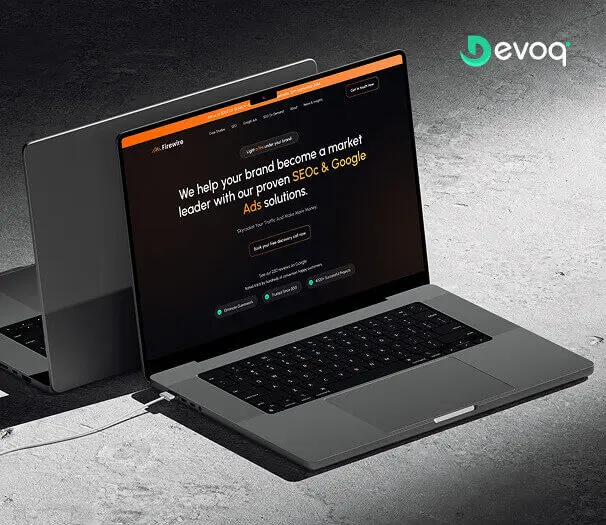
We crafted a sleek and intuitive website for Firewire, a digital marketing company specializing in SEO and Google Ads, to showcase their expertise and results. Our design highlights their data-driven approach to connecting businesses with their audience.
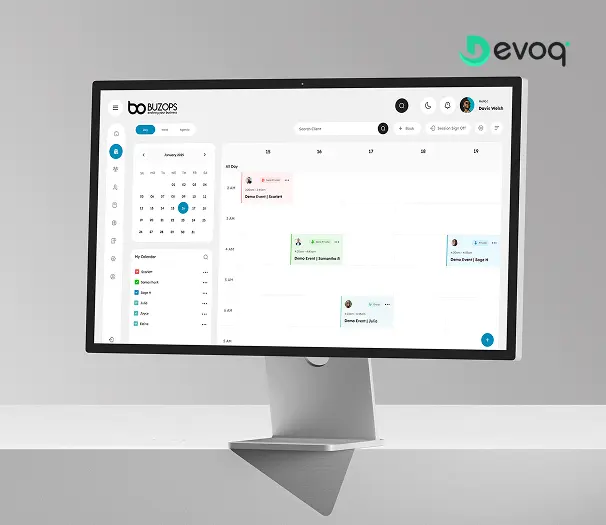
We created a clean and scalable SaaS experience for Buzops, helping businesses manage operations, automate workflows, and improve customer engagement through a unified platform.
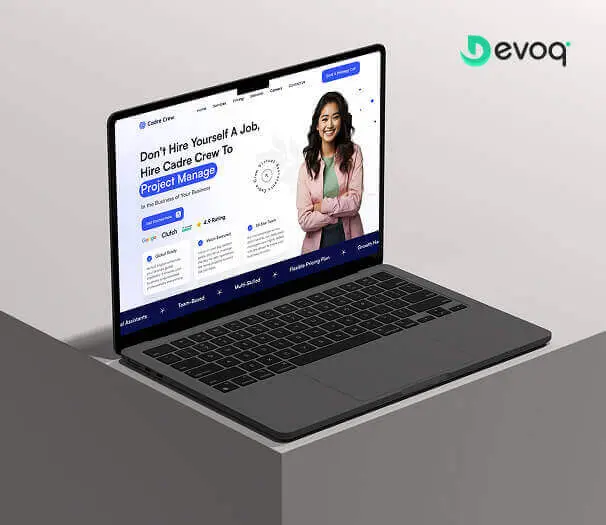
We designed and developed a user-friendly website for Cadre Crew, a company that helps growing businesses scale operations with virtual assistant and project management services. Our goal was to create an intuitive and efficient experience for their users.
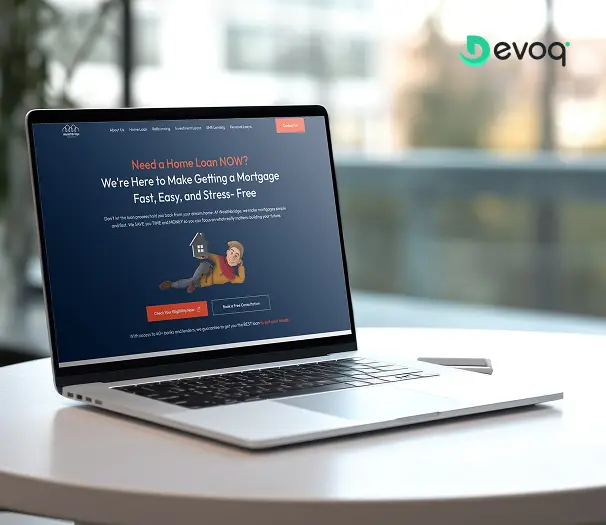
We built a modern online platform for Wealth Bridge, a mortgage and loan comparison service. The goal was a credible, easy-to-use experience that makes complex loan information simple. With a focus on clarity, performance and smooth interaction, the site helps borrowers compare home-loan products and choose the right one with confidence.
We created a compassionate and accessible digital experience for AngelCare, simplifying care discovery, improving NDIS understanding, and empowering users to access personalized support services with ease.
User research with patients and clinicians, journey mapping, wireframes and clickable prototypes, visual interface design, design systems, accessibility checks and developer handoff for patient portals, telehealth apps, provider dashboards, intake flows and healthtech websites. You can take the whole path or a single stage: some clients bring us in for research and prototypes only, others for a design system that their own engineers extend. Each engagement is scoped around the user types and screens you actually have.
How do you design for HIPAA and other privacy rules?
We design consent, data minimization, role-based access and audit trails into the flows, and we document the design decisions so your compliance review has evidence rather than assumptions. For the UK, EU and Australia we apply UK GDPR, GDPR and the Australian Privacy Act in the same way, and for Australian clients we note where My Health Record infrastructure has to stay in the country. Hosting, encryption and policy remain with your security and legal teams; we do not give legal advice.
Can you redesign an existing patient portal or clinical tool?
Yes. We start with a UX audit and analytics review to find where patients or staff drop off, then redesign the flows that are measurably hurting adoption while keeping the integrations and data model you already have. A redesign usually moves faster than a new build because the clinical logic exists; the risk is in changing screens staff have memorized, so we test with them before anything changes in production and plan the rollout in stages.
Do you design AI features for healthcare products?
Yes. Ambient documentation, symptom intake, summaries and care-plan drafts are designed with a clinician review step, visible sources and simple correction, so the AI speeds work without removing accountability. AJMC reported in January 2026 that 62.6% of Epic hospitals had adopted ambient AI documentation, which means draft, review and sign-off patterns are now part of everyday clinical UX. Our AI UI/UX design service covers exactly those patterns.
How accessible will the product be?
We design and test to WCAG 2.2 AA: color contrast, keyboard and screen-reader structure, large tap targets and plain language. Public providers in the US also get the ADA Title II alignment they need, and products sold in the EU are checked against the European Accessibility Act. Testing includes older patients, people using one hand and users of assistive technology, because those are the people a healthcare product most needs to serve well.
How much does healthcare UI/UX design cost?
It depends on the number of user types, screens and integrations and on whether research and testing are included. A patient portal with one user type costs less to design than a platform that serves patients, carers, clinicians and administrators, and each EHR or device integration adds screens and states. We scope a fixed price for a defined product and a monthly retainer for products that keep evolving, after a short discovery call.
How long does a healthcare design project take?
The drivers are the number of user types and screens, how many integrations shape the interface, and whether research and usability testing are in scope. Access to clinicians is often the critical path, because shadowing and testing sessions have to fit around shifts, so we book them in the first week. A focused patient flow moves quickly; a multi-role clinical platform takes longer because each role needs its own research and testing round.
Who owns the designs and the research?
You do, from the first week. Figma files, research recordings and documentation live in your own accounts and the contract assigns the IP to you. Patient and clinician research data stays in your control, which matters for your own privacy obligations, and your engineers or any other agency can keep building on the design system without us. If you later want us back for a new module, we pick up the same files.