Banks, payment companies, lenders and wealth platforms
Fintech and Banking Website Design Services
Devoq Design provides fintech website design for banks, neobanks, payment providers, lenders and investment platforms. We build sites that explain a financial product in plain terms, show the rates and fees honestly, pass accessibility review and send qualified applicants into your onboarding. Designed to WCAG 2.2 AA, with disclosures placed where regulators and customers look for them.
Fintech website design that earns trust before the first sign-up
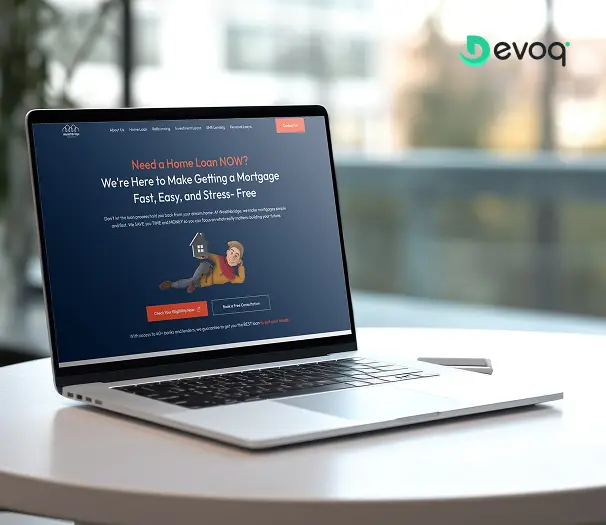
A financial services website asks visitors to hand over identity, income and sometimes their savings, usually after a few minutes of reading. A couple comparing mortgage lenders on a Sunday evening run your calculator, get a figure that the real offer later contradicts, and stop trusting the rest of the site. A small business owner looking for a payment provider cannot find the per-transaction fee without starting an application. A retiree reading a savings page on a tablet with the text zoomed finds the rate table turns into a horizontal scroll. An applicant halfway through a form takes a call, comes back and finds the session has expired and the form is empty. Each of these is a design decision that lost a customer the marketing budget had already paid for. We design the site as part of the customer relationship. Products are described in the words customers use, rates and fees are visible at the point of choice, calculators state their assumptions and match the real offer, trust signals such as licensing and security practices are placed in context rather than in a badge strip, and every application path saves progress and leads cleanly into onboarding without a change of tone. The Wealth Bridge mortgage platform was designed with this approach.
Our Services
Website design for retail banks, challenger banks, payment platforms, lenders, investment firms and insurtech companies:
Homepage and Product Pages
Clear structure for accounts, cards, loans and investments, with fees, eligibility and next steps shown where a customer decides. Each product page follows one pattern, so comparing two accounts is a matter of reading the same rows, not two different layouts.
Calculators and Comparison Tools
Loan, savings and fee calculators that match the real offer, with assumptions stated and results that can be saved or shared. Inputs are designed for a phone keyboard and the output explains what would change the number, not just what it is.
Application and Lead Capture
Short, resumable forms with progress, plain-language errors and consent wording, built to hand clean applicants to onboarding. We decide which questions belong on the site and which belong in the app, so nobody is asked the same thing twice.
Trust, Security and Compliance Pages
Licensing, security practices, complaints routes and regulatory disclosures designed as readable pages, not footer links. Written for the customer who is deciding whether to trust you, and structured so your compliance team can update them without a designer.
Developer and Partner Portals
API documentation, sandbox sign-up and partner landing pages for payment platforms and open banking providers. Designed for the engineer evaluating you in an afternoon, with the first working call reachable in a few minutes and pricing visible without a sales conversation.
Features/Why Choose Us
Disclosures that customers can read
Fee tables, risk statements and terms are laid out for scanning, which supports the clear-communication outcome the FCA Consumer Duty expects of UK firms. A good disclosure sits next to the number it qualifies and reads in one pass; a bad one is a wall of grey text that customers skip and later cite in a complaint. We design the slot once, so every product page inherits it.
Payment pages designed for PCI DSS 4.0.1
Checkout and card-entry pages are designed to work with hosted fields and the script controls PCI DSS 4.0.1 asks about, so your security team has fewer surprises. We plan which scripts may load on a payment page and keep marketing tags away from it, and the design documents the boundary so that a later campaign tag does not quietly widen your assessment scope.
Open banking explained simply
Consent screens and explainer pages for data sharing are written for customers in the UK, EU, Australia and New Zealand, where open banking rules differ. The page has to answer what is shared, with whom, for how long and how to stop it, in that order, before a customer will connect an account. We test the wording with people who have never heard the term open banking.
AI assistants with limits
Capgemini reported in December 2025 that 75% of banks cite customer-service agents as a use case; we design website assistants with visible limits and a one-click route to a person. A good assistant answers product questions, finds the right page and books a call. A bad one attempts suitability advice, which creates a regulatory problem and a customer who was misled by your own homepage.
Retail and Challenger Banks
Payments and Wallet Brands
Lending and Credit Platforms
Wealth and Investment Firms
Approach Section
Our Approach to Fintech Website Design
Discovery and Research
01
We review funnel analytics, call-center themes and competitor sites, and interview customers about what made them trust or abandon a provider. Your compliance and marketing leads join the first workshop together, so disclosure rules and conversion goals are reconciled before anyone draws a page.
Messaging and Wireframes
02
Product hierarchy, disclosure placement and application flows wireframed and tested before visual design. Our wireframe design stage settles where rates, fees and risk warnings sit on each template, which is the decision compliance most needs to see early.
UI Design
03
A web design system consistent with your app, with accessible color and type and templates compliance can review once and reuse. Tables, calculators and comparison blocks get their own components, because financial pages live or die on how clearly numbers are presented.
Usability Testing
04
Sessions where visitors compare products, use a calculator and begin an application, with friction and confusing terms fixed before build. We ask participants to explain the fee back to us in their own words; if they cannot, the page is not finished.
Handoff and Optimization
05
Developer-ready files or CMS templates, then conversion improvements from live traffic, within your approval process. Our CRO service runs the tests on application starts and calculator use, with every variant passing the same compliance review as the original page.
Why Devoq Design?
We make the collaboration of people and interface more intensive and exciting.
Trust-First Hierarchy
Pages ordered so customers see what the product costs and what it does before being asked to apply. Brand claims come after the facts, because on a financial site the facts are the brand.
Review-Friendly Templates
Reusable page blocks with fixed disclosure slots, so each new product page passes legal review faster. Compliance approves the pattern once and then checks only the wording that changes on each new page.
App and Web Aligned
The website and the product share a design language, so sign-up feels like a continuation, not a handover. Colors, type, buttons and form patterns match, and the application never asks again for something the site already collected.
Accessibility Included
Designed to WCAG 2.2 AA, with forms, calculators and tables tested with keyboard and screen readers. A rate table that only makes sense visually is rebuilt until it reads correctly aloud.
Market-Aware Content
Page patterns adapted for US, UK, EU, Australian and New Zealand audiences and their disclosure habits. One design system, with a documented variant for each market's rate display, consent and regulatory footer.
Quick Drafts, Senior Eyes
About 5x faster delivery through AI-assisted drafting, with every template checked by a senior designer. The time saved goes into testing with customers and into compliance review, not into cutting either.
Discover Our Case Studies
Explore Compelling Case Studies: Real Solutions, Real Success Stories
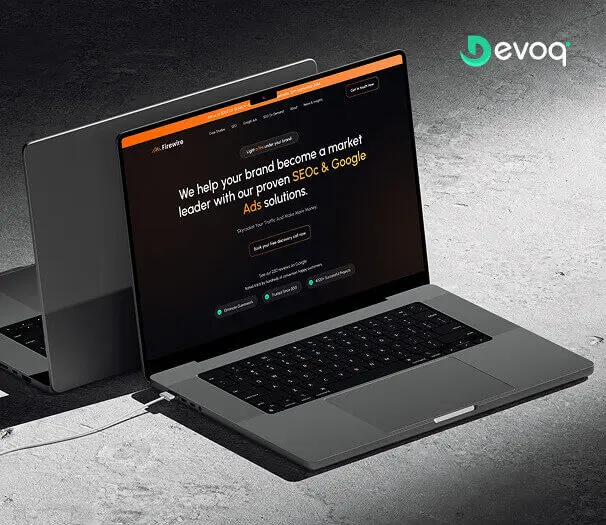
We crafted a sleek and intuitive website for Firewire, a digital marketing company specializing in SEO and Google Ads, to showcase their expertise and results. Our design highlights their data-driven approach to connecting businesses with their audience.
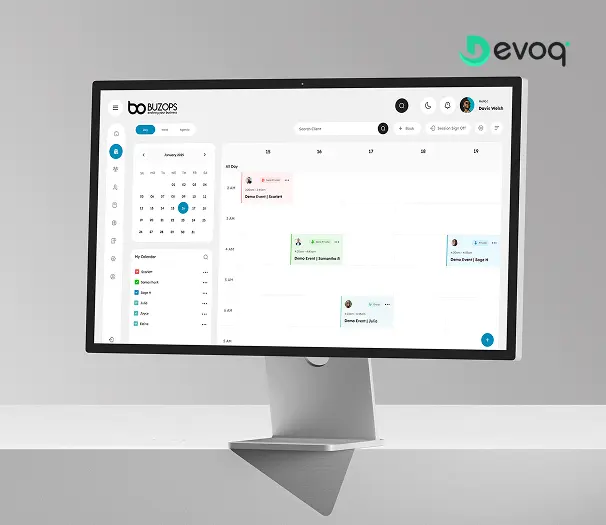
We created a clean and scalable SaaS experience for Buzops, helping businesses manage operations, automate workflows, and improve customer engagement through a unified platform.
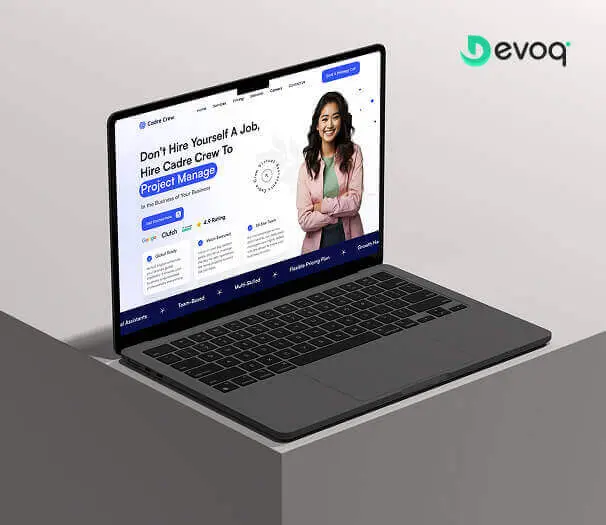
We designed and developed a user-friendly website for Cadre Crew, a company that helps growing businesses scale operations with virtual assistant and project management services. Our goal was to create an intuitive and efficient experience for their users.
We built a modern online platform for Wealth Bridge, a mortgage and loan comparison service. The goal was a credible, easy-to-use experience that makes complex loan information simple. With a focus on clarity, performance and smooth interaction, the site helps borrowers compare home-loan products and choose the right one with confidence.
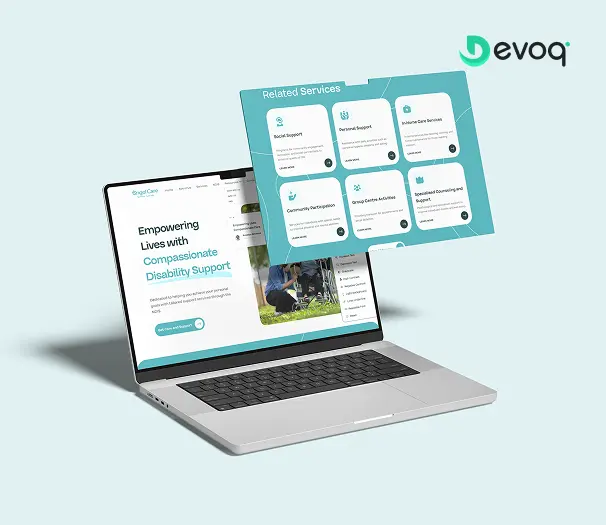
We created a compassionate and accessible digital experience for AngelCare, simplifying care discovery, improving NDIS understanding, and empowering users to access personalized support services with ease.
Research, messaging, sitemap, wireframes, visual design, product page and calculator templates, application flow design, trust and compliance pages, accessibility checks and handoff to your developers or CMS. Content design can be included, with product copy written in plain language and reviewed by your compliance team inside fixed template slots. If you need the build as well, our website development team takes the templates through to launch.
Can you redesign our existing banking or fintech website?
Yes. We review the current site, analytics and application funnel, keep what performs and redesign the pages where visitors leave, usually the homepage, product comparison and the first step of the application. Pages that already rank keep their URLs and headings where possible, and the redesign is released in phases so your compliance team reviews a manageable batch each time rather than the whole site at once.
How much does a fintech website design cost?
It depends on the number of product templates, tools such as calculators, markets and the depth of research. A single-market lender with a few products and one calculator sits at one end; a bank with dozens of products, four market variants and a developer portal sits at the other. After a short discovery call we quote a fixed price for a defined scope, or a monthly retainer when the site will keep adding products and markets.
How long does a fintech website take to design?
The drivers are the number of templates and markets, whether calculators and comparison tools are in scope, whether we are writing content or receiving it, and how many review rounds your compliance process needs. Compliance review is usually the longest step, so we submit templates in batches from the wireframe stage onward. A focused product site moves quickly; a multi-market bank site takes longer because each market needs its own disclosure variants.
How do you handle financial promotion rules and disclosures?
We create layouts with fixed slots for rates, risk warnings and legal text so your compliance team reviews a pattern once. Representative examples, eligibility and the total cost of a product sit next to the headline rate rather than in a footnote, which supports the clear-communication outcomes regulators now expect. Final wording is approved by your own advisers, and we do not provide legal advice.
Can you design pages that take card payments?
Yes. We design payment pages to work with hosted payment fields and the requirements in PCI DSS 4.0.1, and coordinate with your payment provider and developers on how the page is built. The design specifies which scripts may load on the payment page and keeps marketing tags off it, so a later campaign does not widen the scope of your assessment without anyone noticing.
Do you design for PSD2 and open banking journeys?
We design the consent, authentication and explainer content that sits around strong customer authentication under PSD2, and the customer-facing parts of open banking in the UK, Australia and New Zealand. The explainer page is tested with people who have never connected an account before, because the words that make sense to your product team are often the words that make a customer close the tab.
Will the website be accessible?
We design to WCAG 2.2 AA with clear labels, visible focus, keyboard-friendly calculators and tables that screen readers can follow, which also supports the European Accessibility Act duties some financial services face in the EU. Rate tables, comparison blocks and calculators are tested with a screen reader and at high zoom, since those are the components that most often break for the customers who read every number.
Contact Us
Need a fintech website customers trust? Let’s talk