Mobile banking, payments, lending and investing apps
Fintech App Design and Development Services
Devoq Design is a fintech app development company that handles the whole path from research to the front end: mobile banking, payments and wallets, lending, personal finance and investing apps for iOS, Android and the web. Interface design and development sit in one team, so the security prompts, accessibility and error states approved in the prototype are the ones customers meet.
Fintech app development with design that customers trust with their money
Most fintech apps are lost in the first two minutes or the first failure. An applicant is asked for a document photo in a dim kitchen, gets an unexplained rejection and deletes the app before the manual review email arrives. A customer pays for groceries at the checkout, the payment hangs, and the app does not say whether money has moved, so she pays again and later disputes the duplicate. A new investor sees a chart but cannot tell what the fee will be before confirming. A customer travelling abroad triggers a step-up check, cannot receive the SMS code, and is locked out of the account that holds his travel money. Behind each of these is a product decision as much as a visual one. We design the states that others skip: pending, declined, retried, disputed, offline. We write the microcopy for them, test with people who are nervous about money, and build with your engineers or ours through our mobile app development team. The result is an app that feels calm when something goes wrong, which is when trust is won or lost. The Credit Pros credit services app was designed and built this way.
Our Services
Product design and development for neobanks, payment companies, lenders, wealth platforms and embedded finance teams:
Onboarding, KYC and Identity
Account opening, document capture, liveness checks and status tracking designed to lift completion and explain every rejection. The retry screen tells the applicant what to photograph again and why, and the waiting state says how long a manual review takes.
Payments, Wallets and Cards
Transfers, top-ups, card controls and receipts with clear fees, pending states and confirmation that money has moved. Every transfer screen answers from which account, to whom, how much including fees and when it will arrive, before the confirm button is reachable.
Lending and Credit Journeys
Eligibility, offers, repayment schedules and hardship paths designed so borrowers understand cost and options before they accept. The total cost of credit is shown next to the monthly figure, and the route to help when a payment is missed is designed with the same care as the application.
Investing and Wealth Dashboards
Portfolios, goals, risk questions and statements presented with plain language, honest performance views and accessible charts. Fees are shown in currency as well as percentages, and every chart has a text equivalent a screen reader can follow.
AI Assistants and Fraud Alerts
Spending insights, service agents and fraud warnings with explained reasoning, approval steps and a clear route to a human. An agent that can move money asks first, shows what it is about to do and leaves a record the customer can find later.
Features/Why Choose Us
Security prompts people complete
Biometrics, step-up checks and strong customer authentication under PSD2 are designed to protect accounts without sending users to the exit. A good prompt appears at the moment of risk, explains why in one line and offers a second route when the first fails, such as an authenticator when SMS cannot arrive. A bad one interrupts a routine balance check and teaches customers to resent security.
Outcomes you can show
Journeys for UK customers are mapped to FCA Consumer Duty outcomes, and Australian banks and insurers get design decisions documented against APRA CPS 234 expectations. We record, for each journey, what the customer was told, when, and what they could do next, so when a regulator or an internal reviewer asks how a design supports good outcomes, the answer is in the file rather than in someone's memory.
Open banking journeys that make sense
Consent and data-sharing flows built for the Consumer Data Right in Australia and the open banking rules in force in New Zealand since 1 December 2025. The consent screen has to say what is shared, with whom, for how long and how to stop it, in words a first-time user understands. We test the revoke path as carefully as the connect path.
Agents customers can supervise
KPMG reported via PYMNTS in 2026 that 51% of banks are piloting AI agents; we design the approval, limit and escalation screens that make an agent safe to use. The FCA AI Live Testing cohort shows how closely regulators watch. A supervised agent shows what it intends to do, asks before acting on an account, respects the customer's limits and hands over to a person without the customer repeating themselves.
Neobanks and Mobile Banking
Payment and Wallet Apps
Lending Platforms
Wealth and Investing Apps
Approach Section
Our Approach to Fintech App Design and Development
Discovery and Research
01
Customer interviews, funnel and support data review, competitor journey audits and a map of the regulations in each market. We also sit with your fraud and operations teams, because disputed payments and failed verifications show which screens confuse people before any survey does.
Flows and Prototypes
02
Clickable prototypes for onboarding, money movement and failure states, tested with customers on their own phones. We prototype the declined payment, the expired session and the failed document photo first, because a fintech app is judged on how it behaves when something goes wrong.
UI and Design System
03
A token-based component library with accessible color and type, delivered in the format your engineers consume. Amounts, balances, statuses and charts get their own components and rules, so a number is never ambiguous and a pending state looks the same in every journey.
Build and QA
04
Front-end development with your team or ours, tested across devices, OS versions, accessibility tools and failure conditions. Our React Native developers build the cross-platform front end when that is the right choice, and we test biometric, offline and interrupted-session cases on real hardware.
Launch and Optimization
05
Instrumented release, then activation, retention and support-load improvements based on live data. We watch onboarding completion, first-payment success, step-up abandonment and support contacts per journey, and work through the fixes inside your release and compliance process.
Why Devoq Design?
We make the collaboration of people and interface more intensive and exciting.
Failure States Designed
Declined, pending, disputed and offline moments are drawn and written, not left to default messages. Each one tells the customer whether money has moved, what to do next and how to reach a person.
Design and Build in One Team
The people who prototype the flow also build the front end, so intent survives to release. Security prompts and error copy are not simplified away during engineering, because the designers are in the code review.
Compliance as an Input
Authentication, consent and disclosure patterns designed with your compliance team and PCI DSS 4.0.1 scope in mind. Card entry stays inside hosted or tokenized components, which keeps your assessment scope narrow.
Multi-Market Experience
Journeys adapted for US, UK, EU, Australian and New Zealand rules and customer habits. One design system with documented variants for authentication, consent and fee display in each market, so a new market is a configuration, not a redesign.
Accessible Money Screens
Designed to WCAG 2.2 AA, including charts, amounts and confirmation steps that screen readers can follow. A customer using assistive technology can always tell which account money is leaving and how much is going.
Fast With Oversight
About 5x faster delivery using AI-assisted drafting, and no screen ships without senior review. The saved time goes into usability testing with customers who are nervous about money, not into a shorter engagement.
Discover Our Case Studies
Explore Compelling Case Studies: Real Solutions, Real Success Stories
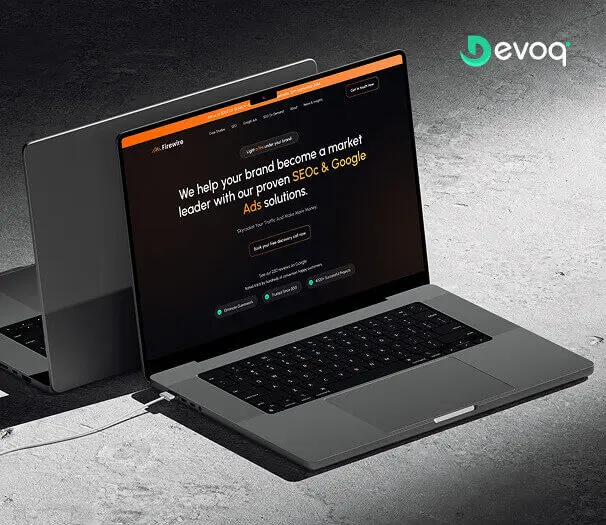
We crafted a sleek and intuitive website for Firewire, a digital marketing company specializing in SEO and Google Ads, to showcase their expertise and results. Our design highlights their data-driven approach to connecting businesses with their audience.
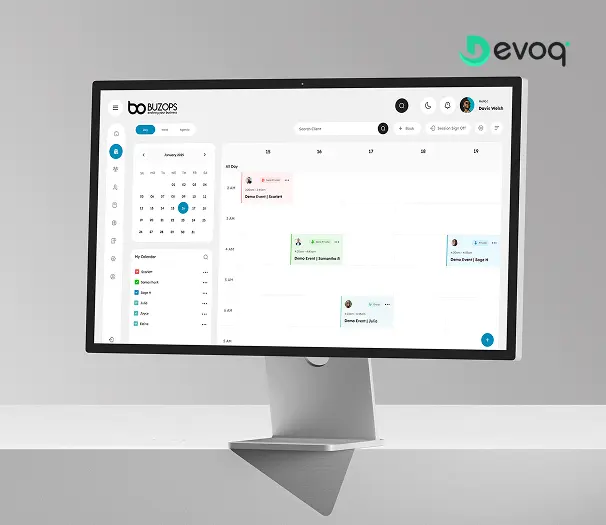
We created a clean and scalable SaaS experience for Buzops, helping businesses manage operations, automate workflows, and improve customer engagement through a unified platform.
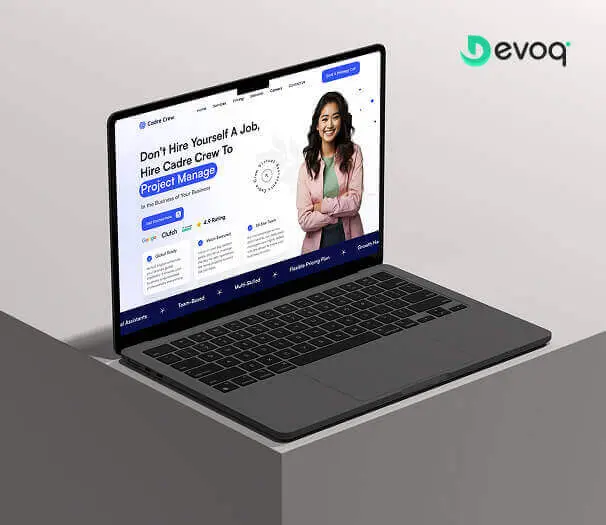
We designed and developed a user-friendly website for Cadre Crew, a company that helps growing businesses scale operations with virtual assistant and project management services. Our goal was to create an intuitive and efficient experience for their users.
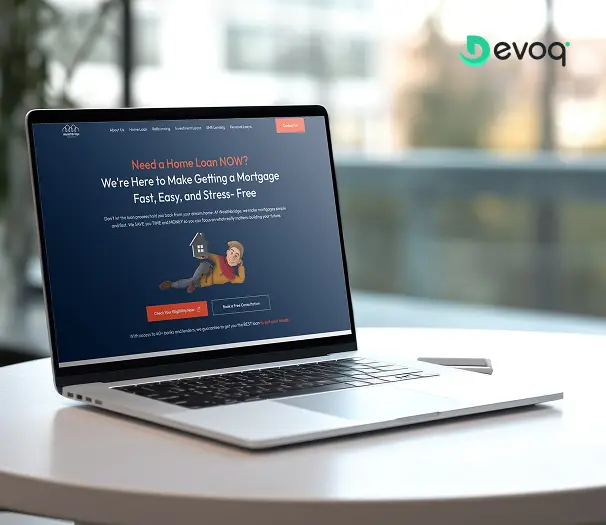
We built a modern online platform for Wealth Bridge, a mortgage and loan comparison service. The goal was a credible, easy-to-use experience that makes complex loan information simple. With a focus on clarity, performance and smooth interaction, the site helps borrowers compare home-loan products and choose the right one with confidence.
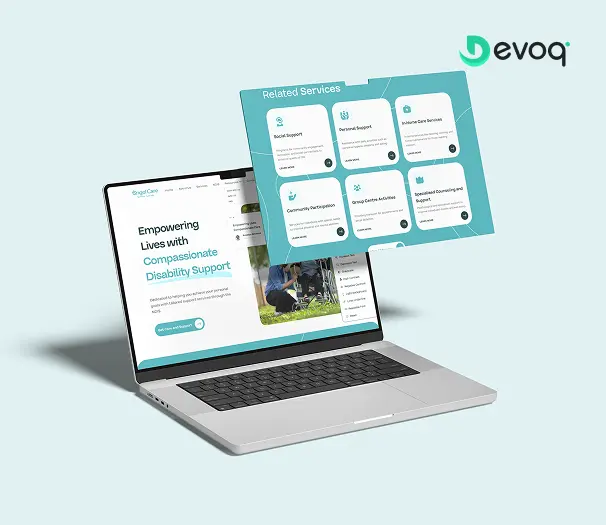
We created a compassionate and accessible digital experience for AngelCare, simplifying care discovery, improving NDIS understanding, and empowering users to access personalized support services with ease.
What do your fintech app development services include?
Research, journey mapping, prototypes, UI and design system, front-end development for iOS, Android and web, accessibility and device testing, analytics set-up and post-launch optimization. You can take the full path or only the design stages and hand a working prototype, tokens and specs to your own engineers. Either way the authentication, consent and failure-state decisions are documented so they survive the handoff and the next compliance review.
Can you redesign our existing banking or fintech app?
Yes. We analyze funnel data, store reviews and support tickets, then redesign the journeys behind the biggest losses, usually onboarding, payments and card controls, while leaving your core systems and providers in place. Changes ship in stages, so customers who know the current flow are not surprised mid-payment, and the riskiest screens are tested with real users before release. The backend contract stays the same; the states customers see get clearer.
How much does fintech app development cost?
It depends on the platforms, number of journeys, integrations and regulatory scope. A single-market wallet with one KYC provider costs less than onboarding, payments, lending and investing across four regulatory regimes with several providers, and each provider adds states that have to be designed and tested. After a short discovery call we scope a fixed price for a defined release or a monthly retainer for ongoing product work.
How long does a fintech app take to design and build?
The drivers are the number of journeys and markets, how many providers the interface depends on, whether native or cross-platform is chosen, and whether research and usability testing are in scope. Provider sandboxes and compliance review are usually the critical path, so we request sandbox access and agree the review pattern in the first week. A focused payment app moves quickly; a multi-product, multi-market app takes longer.
How do you design around PCI DSS 4.0.1?
We keep card entry inside hosted or tokenized components where possible, which narrows the scope of what your app and pages store, and we document the design for your security assessor. The design records which screens touch card data, which scripts may load alongside them and how the tokenized reference is displayed to the customer afterwards. We do not provide legal or audit advice.
Which AI features can you design for a fintech app?
Customer-service agents, spending insights and fraud or scam warnings. Capgemini reported in December 2025 that 75% of banks cite service agents, and each design here includes visible limits, explanation and human escalation. A scam warning is written to interrupt a customer who is being coached by a fraudster on the phone, which is a different problem from a routine confirmation, so we test it with that scenario in mind.
Do you design for open banking in the UK, Australia and New Zealand?
Yes. We design consent, data-sharing and revocation flows for UK and EU open banking, the Consumer Data Right in Australia, and the Customer and Product Data Act regime in New Zealand. The connect screen is tested for whether a first-time user can say what is shared and for how long, and the revoke path is designed to be as easy as the connect path, because that is what makes customers willing to connect at all.
Do you build for both iOS and Android?
Yes. We recommend native or cross-platform based on biometrics, device features and your team, and we follow each platform’s conventions for authentication and accessibility. A card app that depends on wallet provisioning and secure hardware may point to native; a lending app that must reach the widest range of older Android phones often suits cross-platform. We give you the reasoning before engineering budget is committed.