Devoq Design provides restaurant app design and development for iOS, Android and web: ordering apps with fast reorder, delivery and pickup tracking, loyalty programs, table service and kitchen display tools. Designed as one system, built with your engineers or ours, and clear on allergens, tips and payment.
Restaurant app development with design that gets repeat orders
A food ordering app is judged in under a minute: can I see the menu without signing up, can I change the burger without a dozen taps, do I know when it arrives, can I order the same thing again tomorrow. The failures are concrete. A guest ordering for four from the sofa hits a modifier screen with twenty toggles per item and abandons halfway through the second meal. A delivery customer watching a static "preparing" status for thirty minutes phones the restaurant, and a server leaves the floor to answer. A driver in the rain cannot read the next drop-off on a dim screen and taps the wrong order as delivered. A kitchen in full service sees tickets arrive without the allergen flag the guest carefully selected. We design both ends together. Guests get a menu with real modifiers grouped sensibly, saved favorites, honest delivery times and one-tap reorder; staff get tickets, statuses and alerts readable in a hot, noisy kitchen; drivers get large targets and a clear next step. Flows are proven in an interactive prototype with real guests before any code, then built through mobile app development that matches what was tested. A documented design system keeps promotions, new menus and new locations consistent.
Our Services
Product design and development for restaurants, quick-service chains, delivery platforms and food startups:
Ordering and Checkout
Menu browsing, modifiers, upsells, tips and payment designed so guests complete an order fast, with or without an account, including group orders and scheduled pickup without extra screens.
Delivery and Pickup Tracking
Order status, driver location, estimated times and issue reporting that cut where-is-my-order calls to the restaurant, with honest estimates that update rather than a static progress bar.
Loyalty and Offers
Points, rewards, personalized offers and favorites designed to bring guests back without confusing rules, so a guest can see what they have earned and how to use it at checkout.
Kitchen, Staff and Driver Tools
Kitchen display screens, order management, menu availability toggles and driver apps readable at a glance during service, with allergen flags and timers that cannot be missed.
Voice and AI Ordering
Drive-thru voice ordering, recommendations and forecasting interfaces with confirmation steps and a quick handoff to staff, so a misheard item is corrected at the speaker rather than at the window.
Features/Why Choose Us
Fast reorder
Favorites, past orders and smart defaults designed so a regular guest can order their usual in a few taps. A good home screen shows the last order and the nearest location before promotions; a bad one makes a daily customer browse the full menu every time, and after a week they order by phone or through a marketplace.
Allergens and dietary filters
Allergen tags and dietary filters appear at the point of choice and in the basket, with staff confirmation prompts for serious allergies. The flag travels with the order to the kitchen screen in a form the line cannot miss, because a note the guest saw but the kitchen did not is the most expensive gap in the system.
Secure payment flows
Checkout built on compliant payment providers with PCI DSS 4.0.1 in mind, plus Apple Pay and Google Pay patterns guests already trust. Tips, fees and totals appear before the pay button, card entry is the fallback rather than the default, and a declined payment keeps the order intact so a family order is not rebuilt.
Voice AI with confirmation
Taco Bell uses voice AI in nearly 900 drive-thrus and QSR reports full-order completion in 40% of encounters, so we design clear correction and handoff. The confirmation at the speaker reads back the order in plain language, a wrong item is fixed in one tap or one phrase, and staff can take over without the guest starting again.
Quick-Service and Fast Casual
Full-Service Restaurants
Delivery Marketplaces
Ghost Kitchens and Meal Brands
Approach Section
Our Approach to Restaurant App Design
Discovery and Research
01
Interviews with guests, kitchen teams and drivers, plus review of order data, refunds, app reviews and partner platform costs. We stand in the kitchen during a service and ride along on deliveries where we can, since the pressures on those screens cannot be understood from a meeting room.
Flows and Prototypes
02
Clickable prototypes for ordering, checkout, tracking, loyalty and kitchen handling, tested on real tasks before screens are polished. We prototype with your actual menu, including the item with the most modifiers and the dish that sells out, so the layout is proven on the hard cases.
UI and Design System
03
Food-first components, accessibility rules and documented states, delivered in the format your engineers consume. Guest screens carry the brand; kitchen and driver screens get their own type scale, contrast and color rules for distance, glare and gloves.
Build and QA
04
Front-end and mobile development with your team or ours, tested across devices, POS integrations and busy-service conditions. We test on mid-range Android phones, in bright light, with wallet payments in sandbox and with the POS feed running, because that is where launch problems appear.
Launch and Optimization
05
Instrumented release, then conversion, basket size and repeat order improvements guided by live data. The first weeks focus on the screens with the highest drop-off and the support questions the app was meant to remove, and each change ships with a measurement plan.
Why Devoq Design?
We make the collaboration of people and interface more intensive and exciting.
Guest and Kitchen Together
Customer and staff screens designed as one flow so the order does not stall between them. A modifier chosen by the guest appears on the kitchen ticket in the same words, and a sold-out item disappears from the menu the moment the kitchen toggles it.
Speed at Every Step
Fewer taps from open app to paid order, measured against how fast guests actually decide. We count the taps in the prototype and again after build, and every extra screen has to earn its place.
Accessible to WCAG 2.2 AA
Large targets, clear contrast and screen-reader support, including for guests ordering one-handed. We test with larger text settings and VoiceOver or TalkBack, because a modifier list that only works by color fails more people than you would expect.
POS and Partner Aware
Planned around POS, delivery partners, payments and loyalty systems from the start. We map what each system can send and receive before designing, so order status, availability and prices mean the same thing on every channel.
Measured Against Outcomes
Completion rate, basket size and reorder rate agreed up front and reviewed after release. Those numbers, not screenshots, decide whether a release worked and what the next one should fix.
AI Speed, Senior Review
AI drafts about 5x faster, with senior review of every screen. Our AI workflow speeds up flow options and copy, and senior designers check everything before it goes to your engineers.
Discover Our Case Studies
Explore Compelling Case Studies: Real Solutions, Real Success Stories
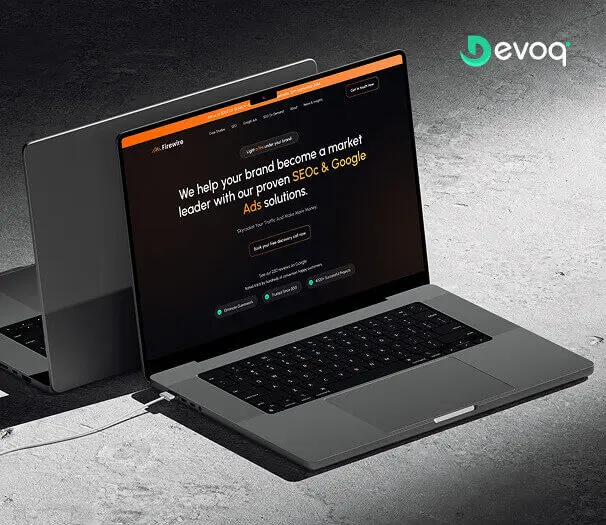
We crafted a sleek and intuitive website for Firewire, a digital marketing company specializing in SEO and Google Ads, to showcase their expertise and results. Our design highlights their data-driven approach to connecting businesses with their audience.
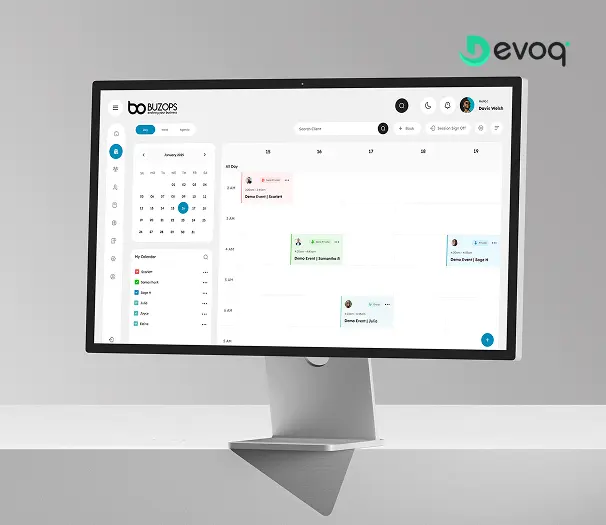
We created a clean and scalable SaaS experience for Buzops, helping businesses manage operations, automate workflows, and improve customer engagement through a unified platform.
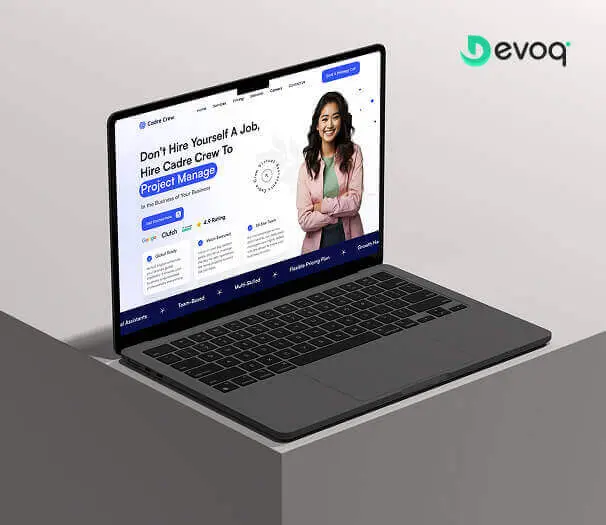
We designed and developed a user-friendly website for Cadre Crew, a company that helps growing businesses scale operations with virtual assistant and project management services. Our goal was to create an intuitive and efficient experience for their users.
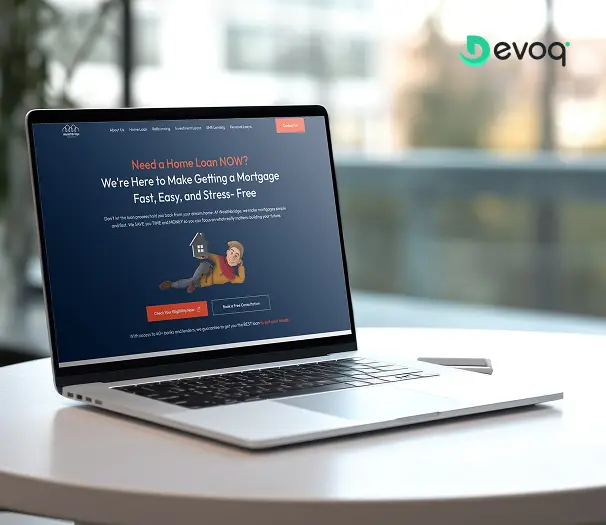
We built a modern online platform for Wealth Bridge, a mortgage and loan comparison service. The goal was a credible, easy-to-use experience that makes complex loan information simple. With a focus on clarity, performance and smooth interaction, the site helps borrowers compare home-loan products and choose the right one with confidence.
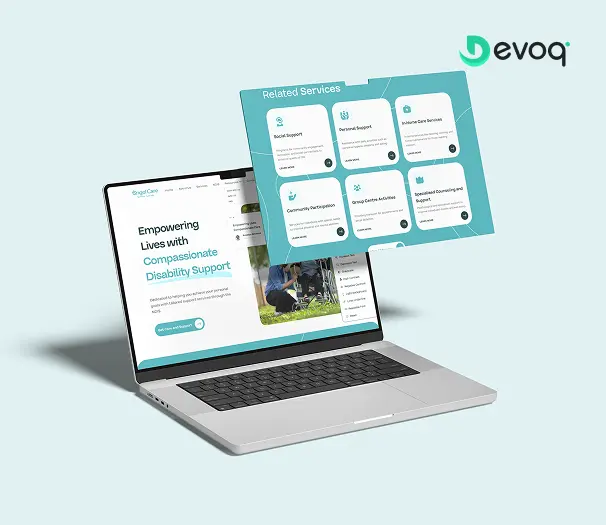
We created a compassionate and accessible digital experience for AngelCare, simplifying care discovery, improving NDIS understanding, and empowering users to access personalized support services with ease.
What do your restaurant app development services include?
Research with guests, kitchen staff and drivers, information architecture, clickable prototypes, visual design, a design system, front-end and mobile development with your engineers or ours, accessibility checks to WCAG 2.2 AA, analytics setup and post-launch optimization. Backend, POS and payment systems are usually yours or your provider's, and we design to what they can support.
Which restaurant apps do you design?
Ordering and delivery apps, pickup and table service apps, loyalty apps, kitchen display and staff tools and driver apps for iOS, Android and the web. They can be one product with guest, kitchen and driver roles or separate apps that share a design system, which is usually better when staff screens run on fixed kitchen hardware and the guest app runs on phones.
Can you redesign our existing ordering app?
Yes. We audit the app, reviews and order funnel, then redesign the screens where guests abandon, often menu, modifiers and checkout, while keeping your POS and payment integrations. If the current codebase is sound we work within it with your engineers; if it is holding the experience back we say so with evidence and set out the options before anything is rebuilt.
How do you design AI features for restaurants?
The National Restaurant Association reported in 2026 that 26% of operators use AI tools. We focus on voice ordering, recommendations and demand forecasting, each with confirmation, correction and a staff fallback, and we measure every feature against order accuracy and speed of service. Our advice is to ship one feature, measure it in a few locations and expand only when the numbers hold.
How much does restaurant app development cost?
It depends on the platforms, the roles (guest, kitchen, driver, manager), the integrations with POS, payments and delivery partners, and whether we also build the front end. After a short discovery call we scope a fixed price for a defined first release or a monthly retainer for brands that keep adding locations, offers and features. Each part of the scope is itemized.
How long does a food ordering app take to build?
Timeline is driven by the number of roles and screens, how many systems the app integrates with, whether kitchen hardware is involved, whether we build as well as design, and how much usability testing is included. A checkout and reorder redesign on an existing app is quick; a new ordering app with kitchen display and driver tools across many locations takes longer. We agree milestones at the start.
How do you handle payment security?
We design checkout around a PCI DSS compliant payment provider so card details never touch your servers, with wallet payments as the default path and card entry as the fallback. The declined and retry states are designed so a payment problem does not empty the basket. Your provider and security team verify the implementation, and we do not provide audit advice.
Do you integrate with our POS and delivery partners?
Yes. We map what your POS, kitchen system and delivery partners support before designing, so menus, availability and order status behave the same across every channel and a sold-out item disappears everywhere at once. Where a system cannot provide something the flow needs, such as a live driver location, we design an honest alternative rather than a status that pretends.
Contact Us
Building or rebuilding a food ordering app? Let’s talk