Devoq Design designs insurance products that customers finish and adjusters trust: quote and bind journeys, policyholder portals, claims apps, broker and agent tools, underwriting workbenches. Research-led, designed around GDPR automated-decision rules and payment security, accessible to WCAG 2.2 AA, with AI used to speed drafts and senior designers deciding what ships.
Insurance UI/UX design services for carriers, MGAs, brokers and insurtech
Insurance interfaces carry more weight than most. A renter comparing three quotes on her phone during a lunch break meets a form that asks for her claims history before it shows a price, and she closes the tab. A driver standing beside a damaged car in the rain opens the claims screen and cannot tell whether the report went through or what happens next, so he phones the contact center instead. An adjuster with forty open files loses ten minutes per claim to a case view that hides the one document she needs. An underwriter handling the exception the rules did not cover has to leave the workbench and ask a colleague by email. We design for those pressure points. The work begins by observing how customers, agents, adjusters and underwriters actually move through a policy lifecycle, then maps flows that respect privacy law, automated-decision rules and security standards from the first wireframe: quote starts that ask the minimum before showing a price, claims screens that state the status and the next step, and workbenches built around the decision rather than the data model. Whether you are a carrier modernizing a portal, an MGA launching a niche product, a broker platform or an insurtech startup, Devoq Design delivers interfaces your customers complete and your engineers can build.
Insurance UI/UX Design Services Across the Policy Lifecycle
Two services shaped by the insurance sector, from public websites to the software behind quotes and claims:
Insurance Website Design
Carrier, broker, MGA and insurtech websites with product pages, quote starts, agent finders and claims entry points built for search, speed and trust. Cover explained in plain language, consent and disclosures placed by design, and a quote starter that works with one thumb.
Policyholder apps, first notice of loss, claims tracking, agent portals and underwriting tools designed mobile-first with compliance in every flow. Explainable automated decisions, document capture from a phone camera, and workbenches designed for long sessions and high volumes.
Insurance UI/UX design by Devoq Design covers the parts that decide conversion and retention:
Designed around the policy lifecycle
We observe quoting, binding, servicing, renewal and claims before drawing a screen, so flows match how carriers, MGAs and brokers actually operate. A good lifecycle design lets a customer move from quote to bind to a mid-term change without re-entering what the company already knows. A bad one treats each stage as a separate product, and customers notice at renewal, which is when they leave.
Automated decisions made explainable
Pricing, eligibility and claims triage screens show the reason and the human route, aligned with GDPR Article 22 and UK GDPR Articles 22A to 22D on automated decisions. We design what the customer sees when a rule declines them, what an adjuster sees when triage flags a claim, and how either can ask a person to look again, so the explanation exists on screen.
Security and payments by design
Premium payment flows planned for PCI DSS 4.0.1, information security aligned with APRA CPS 234 for Australian insurers, and consent and data minimization drawn into every form. Each form is reviewed for the fields it asks and the moment it asks them, because a quote start that demands a date of birth and address before showing any price loses the sale and collects data it did not yet need.
Accessible to WCAG 2.2 AA
Contrast, focus states, large tap targets and screen-reader structure checked on every screen, which also covers the European Accessibility Act for products sold in the EU. A claimant using a screen reader has to be able to report a loss alone, and an agent using keyboard navigation has to quote as fast as a colleague with a mouse. Both are tested with real assistive technology, not inferred from a scanner.
Quote and Bind Conversion
Claims Transparency
Agent and Broker Tools
Explainable AI Decisions
Approach Section
Our Approach to Insurance UI/UX Design Services
Discovery and Research
01
Interviews with customers, agents, adjusters and underwriters, a walk through current quote and claims funnels, and a review of the regulations in your markets. We sit with the contact center too, because the calls that follow a claim submission show exactly which screen failed to say what happens next.
Wireframes and Prototypes
02
Clickable flows for quoting, binding, payments, policy changes, first notice of loss and claims tracking, tested with real users before visual design. Our UX design work starts with the decline, the referral and the partial claim, because the exceptions are where insurance products lose trust.
UI Design
03
A clear, reassuring visual system with accessible color and type, every component state defined, and a design system your engineers can build from. Customer-facing screens and internal workbenches share tokens but not density, so a claimant sees calm and an adjuster sees everything she needs on one screen.
Usability Testing
04
Task-based sessions with policyholders, agents and claims staff, including assistive technology users, with fixes shipped before handoff. We measure whether a customer can say what their cover excludes and whether an adjuster can find the one document that decides the claim, rather than asking if the screens look good.
Handoff and Optimization
05
Developer-ready files, tokens and documentation, then analytics-led improvements after launch as quote, bind and claims data comes in. We watch quote abandonment by step, first notice of loss completion and calls per claim, and work through the fixes with your product and compliance teams inside your release process.
Why Devoq Design?
We make the collaboration of people and interface more intensive and exciting.
Experienced Insurance Designers
Quote journeys, portals and claims tools designed with conversion, security and compliance treated as one brief. We know where a rating engine, a privacy rule and a nervous customer pull in different directions, and we design the screen that holds all three.
Regulation Aware
Automated-decision transparency, consent and payment security planned into the flows rather than patched after a compliance review. Each regulated element has a fixed place in the design system, so a new product starts compliant.
Calm Under Pressure
Interfaces that reduce stress for someone reporting a loss, and that give adjusters the facts without the clutter. Large targets, one question at a time, progress saved at every step and a phone number always in reach.
Customer-Centric Focus
Every flow measured by whether a policyholder can complete it alone: quote, pay, change, renew and claim. If the task ends in a call to the contact center, the design has not finished its job and we keep working on it.
Built to Integrate
Designs that account for policy administration, rating engines, payment gateways and claims systems so screens match the data available. We confirm what each system exposes before a status screen depends on it.
AI Speed, Senior Review
AI drafts layouts, copy and research summaries about 5x faster; senior designers decide every screen that ships. The time saved goes into more rounds of testing with policyholders and adjusters, not into a shorter engagement.
Discover Our Case Studies
Explore Compelling Case Studies: Real Solutions, Real Success Stories
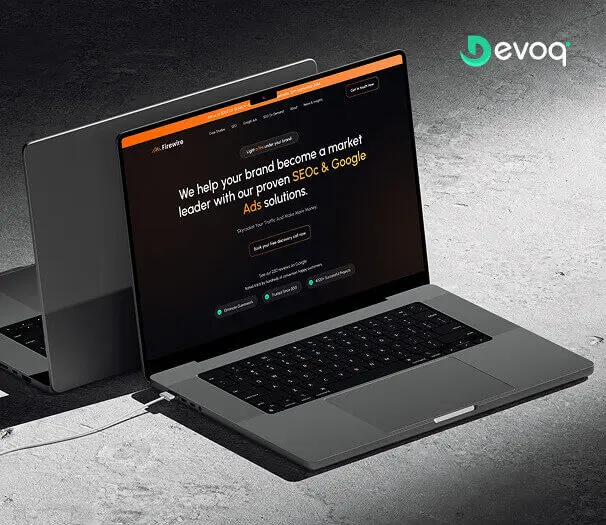
We crafted a sleek and intuitive website for Firewire, a digital marketing company specializing in SEO and Google Ads, to showcase their expertise and results. Our design highlights their data-driven approach to connecting businesses with their audience.
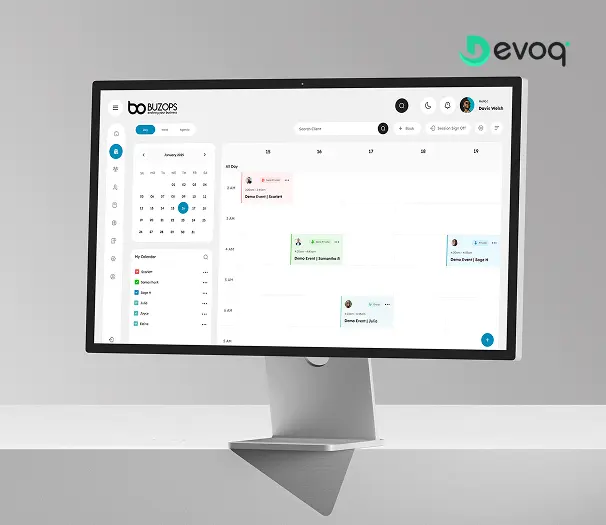
We created a clean and scalable SaaS experience for Buzops, helping businesses manage operations, automate workflows, and improve customer engagement through a unified platform.
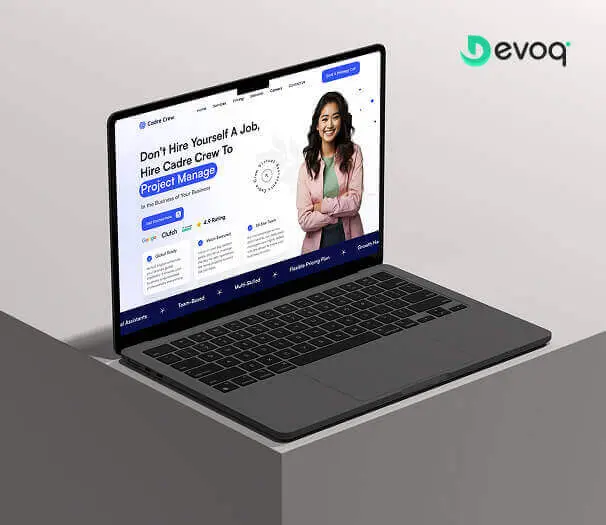
We designed and developed a user-friendly website for Cadre Crew, a company that helps growing businesses scale operations with virtual assistant and project management services. Our goal was to create an intuitive and efficient experience for their users.
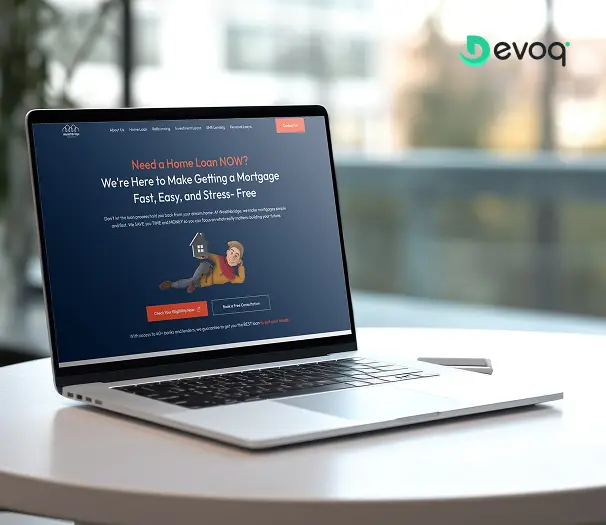
We built a modern online platform for Wealth Bridge, a mortgage and loan comparison service. The goal was a credible, easy-to-use experience that makes complex loan information simple. With a focus on clarity, performance and smooth interaction, the site helps borrowers compare home-loan products and choose the right one with confidence.
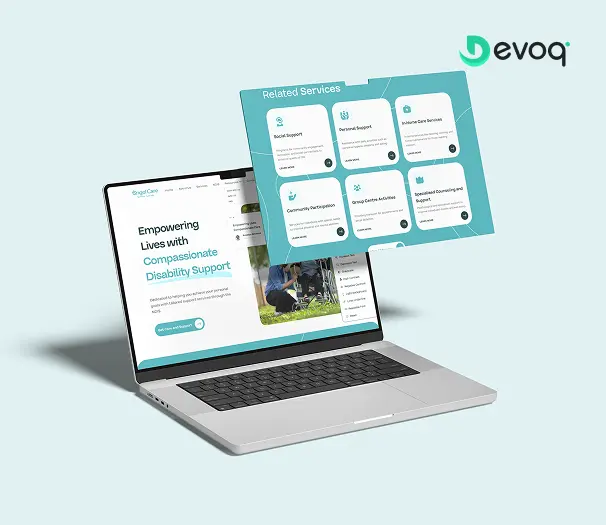
We created a compassionate and accessible digital experience for AngelCare, simplifying care discovery, improving NDIS understanding, and empowering users to access personalized support services with ease.
What do your insurance UI/UX design services include?
User research with policyholders, agents, adjusters and underwriters, journey mapping, wireframes and clickable prototypes, visual interface design, design systems, accessibility checks and developer handoff for quote and bind flows, policyholder portals, claims apps, broker tools and underwriting workbenches. Engagements can cover the whole lifecycle or one stage, and many start with a UX audit of the current quote or claims flow to find where customers and staff are actually stalling.
Which insurance businesses do you work with?
Carriers modernizing customer and agent portals, MGAs launching specialist products, brokers and broker platforms, and insurtech startups building new distribution or claims experiences. The research process is the same; the compliance and integration scope changes with the client. A carrier usually brings a policy administration system and a long list of internal users, while an insurtech brings a blank page and a short runway, and the design plan is shaped around which one you are.
Do you design AI features for insurance products?
Yes. About two thirds of European insurers actively use generative AI (EIOPA, 2026) but only 7% have scaled it (BCG, 2025), and the gap is usually adoption. We design claims first notice of loss automation, document intake and quote assistance with visible reasoning and a human route, so adjusters trust the output enough to use it and customers can see when a person has looked at their case.
How do you handle privacy, automated decisions and payment rules?
Decision screens show the reason and a human review path in line with GDPR Article 22 and UK GDPR Articles 22A to 22D, premium payment flows are planned for PCI DSS 4.0.1, and Australian clients get designs aligned with APRA CPS 234. Each form is reviewed for the fields it asks and when, so consent and data minimization are visible in the design. We document the decisions so your compliance team has evidence; we do not give legal advice.
Can you redesign our existing insurance portal or quote flow?
Yes. We start with a UX audit and funnel analytics to find where quotes, payments or claims are abandoned, then redesign the flows that are measurably losing customers while keeping the policy administration system and integrations you already run. Internal tools are redesigned in stages so adjusters and agents are not retrained overnight, and the riskiest screens are tested with them before anything changes in production.
How much does insurance UI/UX design cost?
It depends on the number of user types, screens, products and integrations and on whether research and testing are included. A single quote and bind flow for one product line costs less to design than a portal serving policyholders, agents and adjusters across several lines, and each rating engine, payment or claims integration adds screens and states. We scope a fixed price for a defined product and a monthly retainer for products that keep evolving, after a short discovery call.
How long does an insurance design project take?
The drivers are the number of user types and product lines, how many systems the interface depends on, and whether research and usability testing with staff are in scope. Access to adjusters and underwriters is often the critical path, since their sessions have to fit around caseloads, so we book them in the first week. A single quote flow moves quickly; a multi-role platform takes longer because each role needs its own research and testing round.
Who owns the designs and the research?
You do, from the first week. Figma files, research recordings and documentation live in your own accounts and the contract assigns the IP to you, which keeps your product roadmap and any customer data gathered in research under your control. Your engineers, or any other agency, can keep building on the design system without us, and if you bring us back for a new product line we pick up the same files.