Copilots, agent consoles, chat and generative tools
AI App and Agent Interface Design Services
Devoq Design is an AI app development company that starts with the interface: copilots inside existing software, chat products, agent consoles, document and image tools, and mobile AI apps. We design input, output, review and control together, and build with your engineers or ours, so the model reaches users in a form they understand and can correct.
AI app development services built around control, clarity and cost
Building an AI app is no longer the hard part; making people comfortable using it is. The failures are concrete. A sales rep opens a copilot between calls, faces an empty prompt box, types one word, gets a paragraph of nothing and closes it for good. A paralegal receives a contract summary with no link to the clauses it came from, cannot verify it under deadline, and reads the whole document anyway. An operations manager lets an agent reconcile records overnight and arrives to changes nobody can explain, so the feature is turned off before lunch. A product lead sees the monthly model invoice and cannot map it to any screen their users saw. We design these moments on purpose: starter prompts and templates that show what is possible, streaming states that explain what the system is doing, plans an agent shows before it acts, edit and undo for every output, citations that open the source in place, and usage visibility that keeps cost understandable. Components are documented in a design system so new AI features ship consistently instead of each team inventing its own chat pattern, and our AI integration engineers connect the interface to your models, tools and data.
Our Services
Product design and development for AI-native startups, enterprise copilots, developer platforms and consumer AI apps, from first prompt to usage invoice:
Chat and Copilot Interfaces
Prompt entry, context, streaming answers, citations and follow-ups designed for the work a person is actually trying to finish. Starting points replace the blank box.
Agent Consoles and Approvals
Task plans, step logs, approval gates, pause and rollback so people supervise agents without watching every move.
Generative Creation Tools
Image, text, code and document tools with variations, history, comparison and editing controls built around iteration.
Evaluation, Feedback and Review Screens
Rating, correction, flagging and annotation flows that turn user feedback into data your team can act on.
Usage, Billing and Admin Controls
Credits, token and seat meters, model selection, permissions, audit logs and spend limits for teams and enterprises.
Features/Why Choose Us
Agents that show their plan
Gartner warns over 40% of agentic AI projects may be cancelled by end 2027; we design clear scope, visible steps and approvals so projects earn lasting trust. An agent console lists what the agent intends to do before it starts, marks the steps that need a human, and keeps a log a manager can read afterwards.
Provenance in every answer
Sources, retrieval context and confidence cues appear beside the output, with an easy path to flag a wrong answer. We design the citation so the passage, record or document opens in place rather than in a new tab the user never clicks. Trust is built the first time a person checks an answer and finds it right.
Automated decisions made contestable
Where an AI outcome affects a person, we design explanation and human-review routes aligned with GDPR Article 22 and the EU AI Act transparency rules from August 2026. The user sees that a system was involved, what it concluded and how to ask a person to look again. These are reusable components, documented so your counsel has something concrete to review.
Cost control as interface
Per-run estimates, budgets, caching cues and model-choice controls make spend visible before it becomes a surprise. Before an expensive job the product shows an estimate; after it, the actual. Teams get limits and alerts, and simple tasks are steered to lighter models.
Enterprise Copilots
Agent Platforms
Consumer AI Apps
Developer and API Tools
Approach Section
Our Approach to AI App and Agent Interface Design
Discovery and Research
01
Interviews with target users, a map of tasks suited to automation, and a review of the model failure modes the interface must handle gracefully. Real conversation logs matter, because the prompts people type rarely match the ones the team imagined.
Flows and Prototypes
02
Clickable prototypes with scripted good and bad model responses, tested with users on their own tasks. We deliberately plant a wrong answer, a timeout and a partial result, then watch whether people notice and recover.
UI and Design System
03
A token-based system with documented AI components such as message, citation, approval card and usage meter, delivered in the format your engineers consume. Our design systems work defines loading, streaming, partial, error and refused states for each component.
Build and QA
04
Front-end development with your team or ours, tested against slow, empty, partial and incorrect model output as well as the happy path. Keyboard-only and screen-reader passes cover streaming text and dynamic updates.
Launch and Optimization
05
Instrumented releases with feedback capture, then prompt, flow and cost improvements prioritized from real usage. We review acceptance, correction and abandonment rates with your team each sprint.
Why Devoq Design?
We make the collaboration of people and interface more intensive and exciting.
Designers Who Understand Models
Latency, context limits, hallucination and cost treated as design constraints from the first sketch. What the user sees before the first token is designed as carefully as the answer.
Human Oversight by Design
Approval, edit and escalation patterns that keep a person accountable for consequential outcomes. Gates sit only where an action is hard to reverse.
One System for All AI Features
A shared component library so chat, agents and generation feel like one product. New features reuse message, citation and approval components.
Measured Against Trust Signals
Acceptance rate, correction rate and repeat use tracked after release, not just launch-day downloads. If users stop checking sources, we treat it as a design defect.
Accessible AI Interfaces
Streaming text, dynamic updates and voice input designed to WCAG 2.2 AA, so assistive technology users are not left out.
AI Speed, Senior Review
AI drafts layouts, copy and research summaries about 5x faster; senior designers decide every screen that ships.
Discover Our Case Studies
Explore Compelling Case Studies: Real Solutions, Real Success Stories
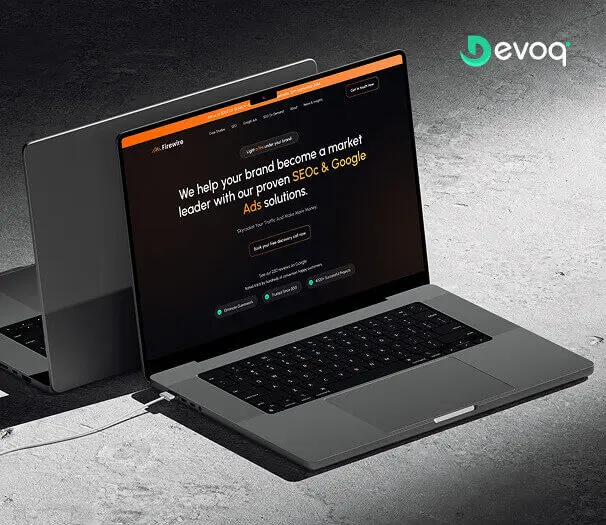
We crafted a sleek and intuitive website for Firewire, a digital marketing company specializing in SEO and Google Ads, to showcase their expertise and results. Our design highlights their data-driven approach to connecting businesses with their audience.
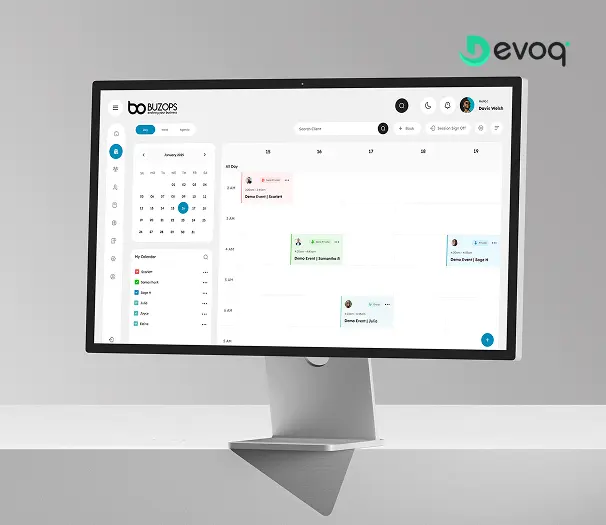
We created a clean and scalable SaaS experience for Buzops, helping businesses manage operations, automate workflows, and improve customer engagement through a unified platform.
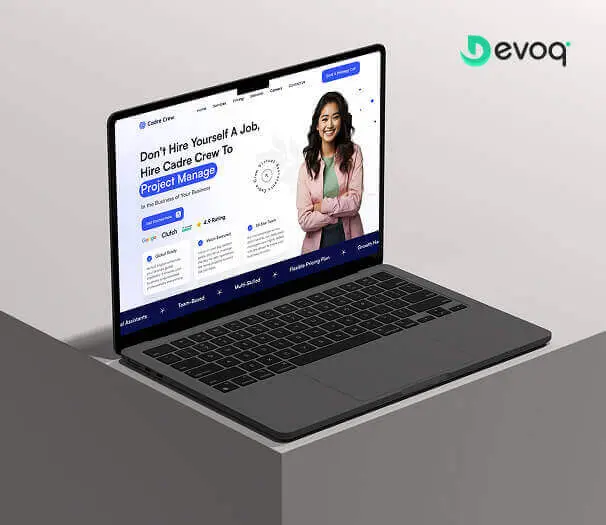
We designed and developed a user-friendly website for Cadre Crew, a company that helps growing businesses scale operations with virtual assistant and project management services. Our goal was to create an intuitive and efficient experience for their users.
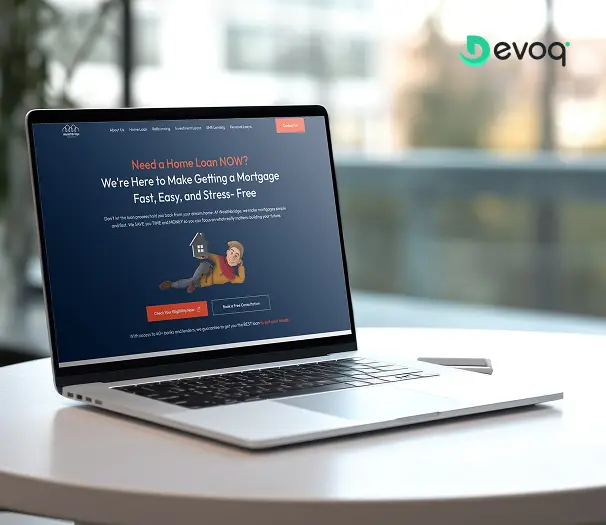
We built a modern online platform for Wealth Bridge, a mortgage and loan comparison service. The goal was a credible, easy-to-use experience that makes complex loan information simple. With a focus on clarity, performance and smooth interaction, the site helps borrowers compare home-loan products and choose the right one with confidence.
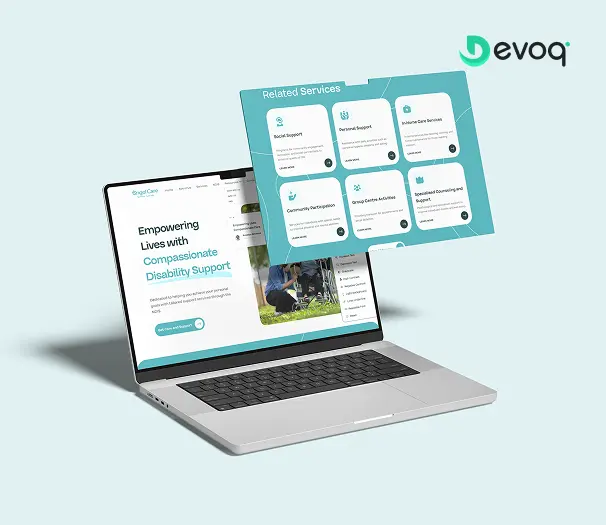
We created a compassionate and accessible digital experience for AngelCare, simplifying care discovery, improving NDIS understanding, and empowering users to access personalized support services with ease.
User research, interaction design for AI behavior, clickable prototypes, visual design, a design system with AI components, front-end development with your engineers or ours, accessibility checks, analytics and post-launch optimization for web and mobile AI products. Scope usually covers the copilot surface, agent console, feedback flows and the usage and admin screens that make the product sellable to teams.
Do you build the models or only the interface?
We focus on product design and front-end development. We work with your ML team or API providers on the model side and shape the interface around what the system can reliably do. Where you need the plumbing between interface and model, such as retrieval, tool calling or conversation memory, our engineers or an AI chatbot developer from our team can build it alongside the front end.
Can you redesign our existing AI app or chatbot?
Yes. We review conversation logs, feedback and analytics to find where users give up or distrust the output, then redesign those flows while keeping your models and backend in place. Common fixes are starting points instead of a blank prompt, citations beside the answer, a plan and approval step before an agent acts, and a usage view that explains the invoice.
How much does AI app development cost?
It depends on the platforms, number of user roles and AI features, whether a design system is needed and whether we build the front end. A copilot inside an existing product is a smaller scope than an agent platform with approvals, usage billing and mobile apps. After a short discovery call we scope a fixed price for a defined release or a monthly retainer for continuing work.
How long does an AI app project take?
The drivers are the number of AI features and roles, whether the model behavior is settled or still changing, how much user testing with scripted failures is in scope, and whether we build as well as design. A single copilot surface moves quickly; an agent console with approvals, billing and admin takes longer. We release in stages so the core surface reaches users while later screens are still in testing.
How do you design safe and controllable AI agents?
Each agent gets a stated scope, shows its plan before acting, asks for approval on consequential steps, logs what it did and offers undo. These patterns help teams avoid the unclear interfaces behind many stalled agent projects.
How do you handle AI disclosure, privacy and explanation rules?
We design disclosure labels for the EU AI Act transparency rules from August 2026, and explanation and human-review paths where GDPR Article 22 or the UK GDPR provisions after the Data (Use and Access) Act 2025 may apply. For Australian products we plan for automated decision transparency under the Privacy Act from December 2026. We document the decisions as design evidence, while your legal team confirms what applies to you.
Who owns the designs, the system and the code?
You do, from the first week. Figma files, tokens, documentation and any code we write live in your own accounts and the contract assigns the intellectual property to you. That includes the AI component library and the prompts and evaluation sets we help write.